WHAT IS MAD INTELLIGENCE?

Patent pending

Mad Intelligence™

Mad Intelligence™ is a patent-pending architecture for continuing engineering even after the team leaves site. It keeps the designer’s intent active, connects it to the systems that can deliver it and uses evidence to decide what needs to happen next.

For museums, visitor centers, attractions and other physical spaces, it keeps the purpose of the experience active through daily operation, maintenance and future upgrades.

THE EXPERIENCE COMES FIRST

First, define what matters.

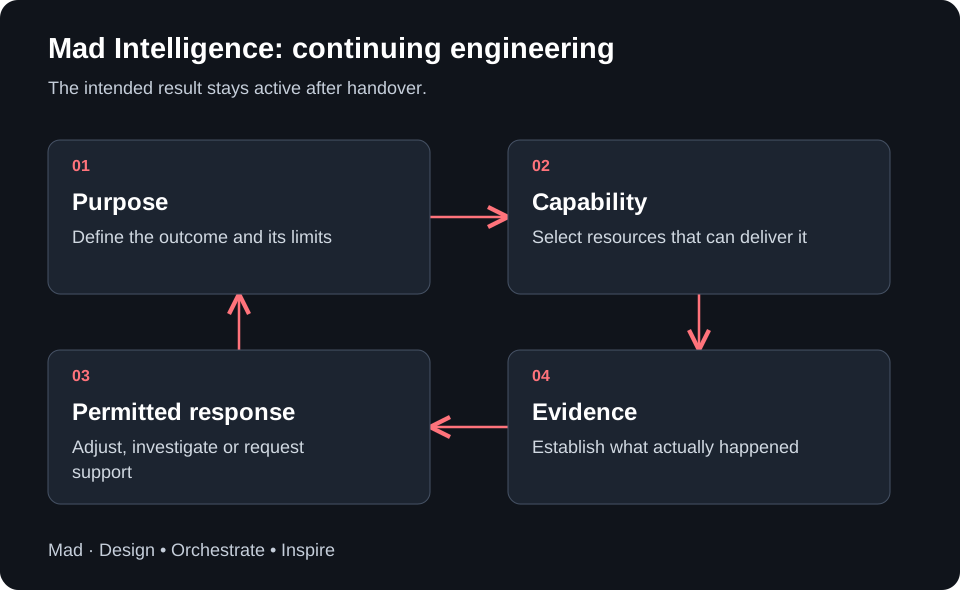
  1. Purpose

    Define what the experience must achieve.

    The designer’s intent, the people it serves and the conditions that must remain true.

  2. Capability

    Establish what can deliver it.

    The systems, software and resources that can achieve that purpose in this environment.

  3. Evidence

    Define what will establish the result.

    The measurements and observations needed to establish whether the intended result was achieved.

Then keep that relationship active as the venue changes.

Mad Intelligence: continuing engineering
The architecture links the designer’s purpose, available capability and evidence of the result. It keeps unresolved needs visible and directs the next permitted action.

PURPOSE FIRST. A CONNECTED FAMILY.

One purpose. The capabilities to keep delivering it.

Mad Intelligence™

The designer sets the purpose. Mad Intelligence keeps it active.

Mad Intelligence is the overarching layer for purpose and continuing engineering. It brings the intended experience, the capabilities that can realize it and the evidence of the result into the same operating picture. The aim stays active through everyday operation, changing conditions and future upgrades.

Governed operating architecture

WorldModel™

The WorldModel™ architecture defines governance, consent, multi-system coordination, safety intervention and accountability for intelligent physical environments. Shared operational state supplies context within that wider design; it is not the complete architecture.

Explore WorldModel

Realization and technology family

AV++®

AV++ brings together the technologies that make the experience happen: media, sound, personal storytelling, language, access, show control and operator tools. QuickSilver® provides the distributed computing foundation.

New from Mad · Part of AV++®

Mad Hatter™

A DSP with a much wider role. Hatter brings its processing foundation together with soundscape authoring, spatial listening, listener context and acoustic evidence. Mad Intelligence connects that acoustic work to the purpose of the whole experience.

Meet Mad Hatter

Explore the complete AV++ family

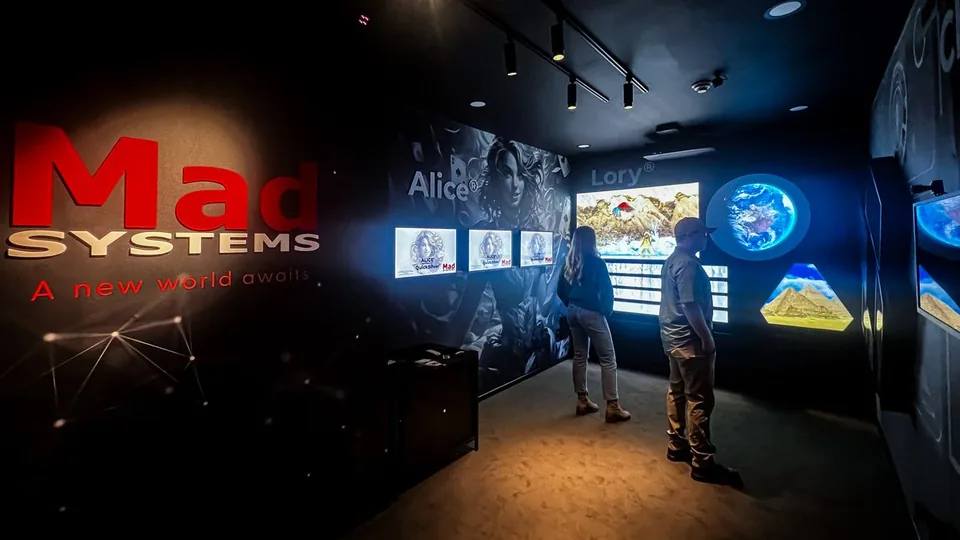
Projection, displays and seating in Mad’s Wonderland demonstration room
Mad’s Wonderland demonstration room, shown in an earlier configuration. Bring the intended experience and the conditions it needs to work within; the team can discuss the relevant demonstrations, engineering and acceptance evidence.

A BRIEF THAT STAYS ACTIVE

The room changes. The purpose remains.

A gallery has a purpose. People need to hear its story, see the information, access it in a suitable language and take part in the experience the designer intended.

Mad Intelligence™ is Mad's architecture for carrying those requirements through commissioning, daily operation, maintenance and future upgrades. It keeps a record of what matters, what may vary and what evidence will establish the result.

As audiences, content, equipment and conditions change, the system can adjust within agreed limits, qualify alternatives and identify what needs attention. The original brief remains the reference, years after handover.

DesignRetain the purpose
CommissionEstablish the result
OperateCheck and adapt
EvolveRequalify the change

CREATIVE CONTROL

Give the whole experience a shared purpose.

A designer might ask for a storm to approach from the east, cross the room and build around the audience, while the narration stays clear and the effects remain within the venue's limits.

Sound, projected imagery, lighting, airflow and tactile effects can each contribute. Personal devices can deliver an approved language or accessible alternative. A presenter can have a defined role in the same sequence.

Mad Intelligence provides a common purpose for those contributions. The designer decides what stays exact and where the system may respond. Fixed cues, live events and permitted generated content can work within the same experience.

TECHNICAL DETAIL

Every result informs the next response.

Open the engineering detailClose this sectionLook for the red circuit symbol for engineering detail.

The relationship continues throughout operation. New evidence updates the understanding of the environment and the next decision.

01

Understand

Maintain the relevant view of the environment: current conditions, available resources, audience needs and permitted preferences. WorldModel™ can supply the shared context and governance that keep the wider venue coherent.

02

Decide

Retain the intended result and its limits. Determine which resources are eligible, what they can achieve together and what evidence will be needed.

03

Personalize

Adapt media to the visitor’s age, interests and chosen depth, with language and accessibility through permitted channels. Alice®, CheshireCat® and Lory® contribute complementary capabilities, with consent and the intended information kept in view.

04

Realize

Coordinate media, audio, lighting, displays, physical effects and personal delivery through qualified resources. QuickSilver® provides a distributed compute foundation. Mad Hatter™ applies the full intent-driven approach to the acoustic experience.

05

Verify and adapt

Evaluate what actually happened against the agreed requirement. Correct what the system is authorized and able to correct; preserve unresolved needs and call for the next useful action. Mad Hatter contributes here too, checking acoustic delivery and adapting when the room changes.
IN THE GALLERY

Keep the story available as conditions change.

Consider a gallery whose narration must remain intelligible in the visitor's selected language. As more people enter, the acoustic conditions change.

The system assesses the effect on the agreed result. It may adjust qualified audio resources, use a permitted personal-delivery path or coordinate another accepted form of access. It then checks whether that response achieved the requirement.

If the available resources cannot meet the target, or the evidence cannot establish the result, that gap remains visible. The next step may be a better measurement, an approved adjustment, maintenance or a defined improvement to the installation.

Illustrative application. Delivery and verification depend on the resources, permissions and evidence specified for the installation.

CONTINUITY OF PURPOSE

Preserve the intent through the next upgrade.

A replacement device should be judged by what it can deliver in this installation. Mad Intelligence retains the purpose and the relevant history so a new display, processor, sensor, software release or loudspeaker can be assessed against the same need.

Improvement may come from calibration, software, content, added processing or a different combination of existing resources. Physical replacement is one option. The system can compare candidates and test whether the chosen change improves the intended result.

When the required capability is not yet available, the need remains defined. A later upgrade can answer that need without forcing the designer to rewrite the purpose around a new product.

DEFINED AUTHORITY

People set the boundaries.

The venue sets the rules for what may change automatically, what needs a bounded trial and what requires human approval. Safety limits, consent, accessibility requirements and protected creative choices remain part of the decision.

WorldModel supplies the broader governance framework. Mad Intelligence relates those rules to resource selection, physical action and evidence. AI can help interpret a brief, form content, diagnose a problem or propose an improvement within that mandate.

Operators receive a useful account of the situation: which requirement is affected, what is established, what remains uncertain and which responses are available.

THE MAD FAMILY

Complementary capabilities. An enduring purpose.

AV++® is Mad’s family of technologies for media, sound, interaction, language, accessibility and operation. QuickSilver® provides its computing foundation. TeaParty® supplies system and show control. Alice®, CheshireCat® and Lory® contribute personal storytelling, recognition and supported delivery. PixelsEverywhere™ makes the visual interpretation programmable.

WorldModel coordinates relevant context, consent and governed action. Mad Hatter carries intent, realization, verification and repair into sound. Mad Intelligence connects these capabilities to the continuing purpose of the installation.

Each project can start with the scope it needs and retain a path to further capability.

PRACTICAL QUESTIONS

Plan around the result.

Does Mad Intelligence replace show control?

It can work with existing show control. Fixed timelines, precise cues and event-driven responses remain available; the retained requirement and the evidence of delivery give them a continuing purpose.

Can it always achieve any result?

The intended result must be achievable with the available resources under the relevant conditions. When it cannot be achieved or verified, the architecture keeps the gap active and identifies the next useful action.

Does it require generative AI?

No. AI can contribute interpretation, content, diagnosis or planning. Deterministic software, optimization and human-authored workflows can also perform these functions within the architecture.

What can we start with?

Start with a specific experience or operating requirement. Mad can define the resources, evidence, permissions and implementation scope needed to assess and sustain that outcome.

ENGINEERING DETAIL

Specify the outcome and the evidence.

Open the engineering detailClose this section

Begin with the experience the venue must keep delivering. Define its operating conditions, the resources that can achieve it, the evidence that will establish the result and the changes the system may make.

The project specification identifies working components, new integrations and continuing development. Hatter’s head-tracked loudspeaker rendering and Alice’s local language-model interaction demonstrate those particular capabilities; acceptance of the connected installation establishes its own result.

LET’S BUILD WHAT COMES NEXT

What should your environment keep making possible?

Bring us an experience you want to create, a recurring operating problem or a requirement that must remain true throughout your venue’s life.

Talk with Mad